
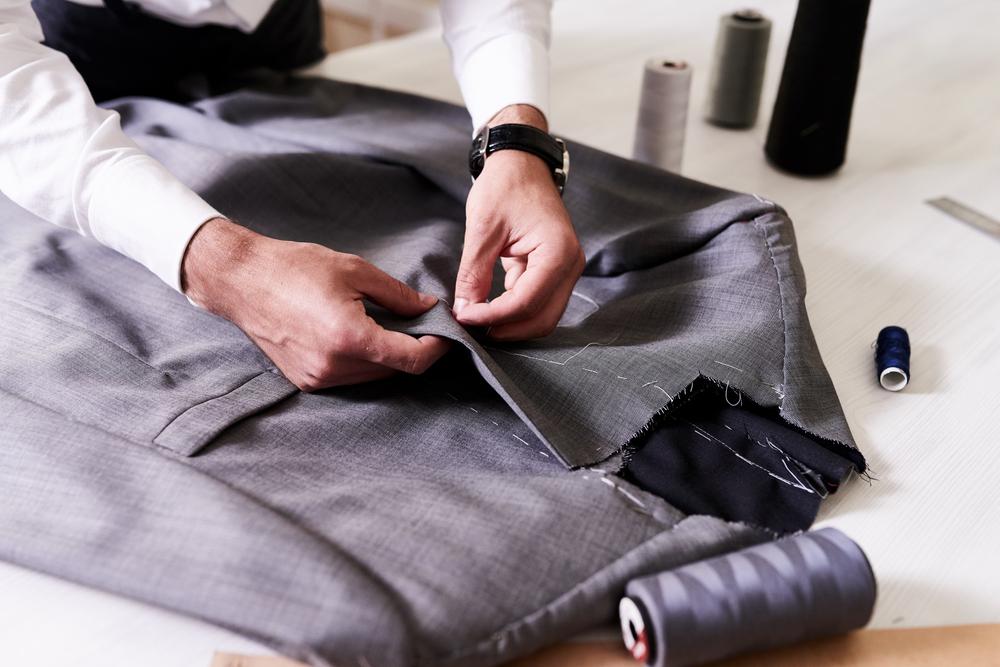
Types of Suit Cuts: Savile Row vs. Italian vs. American
The three main types of suit cuts are British, Italian, and American, and they differ mainly in shoulder structure, waist shaping, and drape. The British cut is structured with a defined waist. The Italian cut is softer and closer to the body. The American cut has natural shoulders and a straight, relaxed body. Each suits different builds and settings.
Knowing the difference helps you ask for what you actually want when you order a custom suit. Peter Panos has been fitting men in San Francisco since 1978, and the cut you choose shapes everything from the shoulder line to the right fabric weight.
What Are the Three Main Types of Suit Cuts?
Each tradition grew out of a different climate, culture, and idea of what a suit should do. British tailoring builds a frame, Italian tailoring follows the body, and American tailoring prioritizes ease. The table below compares them on the details you can see and feel.
| Feature | British (Savile Row) | Italian (Neapolitan) | American (sack suit) |
|---|---|---|---|
| Shoulder | Structured, lightly padded, often with a roped sleevehead | Soft or unpadded, sometimes a shirt-style shoulder | Natural, minimal padding |
| Waist | Clearly suppressed for an hourglass line | Close-fitting and tapered | Little or no suppression; straight body |
| Jacket length | Classic to slightly long | Often shorter | Classic |
| Vents | Usually two side vents | Varies; side vents or ventless | Single center vent |
| Typical cloth | Medium to heavy wools that hold structure | Lighter, breathable wools and blends | Mid-weight wools, flannel, seersucker for summer |
| Overall feel | Formal, composed, authoritative | Relaxed, sleek, modern | Comfortable, easygoing, traditional |
The British Cut: Savile Row Structure
The British cut treats the jacket as a frame. It uses a firm canvas and lightly padded, squared shoulders to build a clean line from the collar to the sleeve, then pulls in at the waist to create an hourglass shape. The result looks composed and deliberate, which is why it remains a benchmark for formal business dress.
The style traces back to London’s Savile Row and carries a strong military influence. Common details include:
- Structured shoulders that extend slightly past the natural shoulder line, often finished with a roped sleevehead.
- A defined waist that shapes the torso without restricting movement.
- Two side vents that let the jacket move when you sit or reach into a pocket.
- Higher armholes that keep the jacket in place when you raise your arms.
- Flap pockets, sometimes with an extra ticket pocket above the right hip.
The British cut works best in cloth with enough body to hold its shape. Medium and heavier worsteds from mills such as Holland & Sherry and Scabal keep the line crisp through a long day, which makes this cut a natural fit for custom business suits.
The Italian Cut: Soft Shoulders and a Close Fit
The Italian cut removes much of the internal structure and lets the cloth do the work. Shoulders are soft or unpadded, the jacket sits close to the body, and it is often cut a little shorter. The look is sleek and relaxed, and it tends to feel lighter on the body than a structured British jacket.
- Soft shoulder: little or no padding, so the shoulder follows your own line. Neapolitan tailors are known for the spalla camicia, a shoulder sewn like a shirt sleeve.
- Close, tapered body: the shape comes from the cut rather than from a stiff canvas.
- High armholes: these allow a trim sleeve that still moves freely.
- Lighter cloth: breathable wools and blends suit the soft construction and warmer days.
Is There Just One Italian Style?
No. “Italian cut” usually refers to the soft Neapolitan style, but Italian tailoring varies by region. Tailors in Rome and Milan have traditionally favored more structure and sharper shoulders than Naples. If you ask for an Italian cut, it helps to say whether you mean soft and unstructured or sleek and sharp.
The American Cut: The Sack Suit
The traditional American cut, known as the sack suit, puts comfort first. The jacket hangs straight from natural shoulders with little or no waist shaping, giving a roomy fit that is easy to wear all day. It became closely associated with Ivy League campuses and mid-century American business dress.
According to The Woolmark Company, the sack suit is defined by natural shoulders, a single back vent, straight-hanging lines, and flap pockets, and it is often recommended for men with larger frames. Other traditional details include:
- Undarted front: no front darts, which produces the straight, boxy line.
- Three-roll-two closure: a three-button front where the lapel rolls past the top button, so only the middle button is fastened.
- Fuller trousers: traditionally cut straighter and roomier than British or Italian styles.
Modern American tailoring has moved on from the pure sack suit, and many American-style jackets now include some waist shaping and light shoulder structure while keeping the relaxed overall fit.
Which Suit Cut Is Best for Your Body Type?
Choose the cut that adds what your frame lacks and leaves alone what it already has. Structure helps narrow or sloping shoulders. A close cut suits slim and athletic builds. A straighter body is kinder to larger frames. These are starting points, not rules.
| Build | Cut to consider | Why it works |
|---|---|---|
| Slim or slight frame | British | Structured shoulders and a defined waist add shape and presence |
| Sloping or narrow shoulders | British | Light padding squares the shoulder line |
| Athletic, broad shoulders, tapered waist | Italian | Soft shoulders avoid adding bulk to an already strong frame |
| Slim and tall | Italian or British | A close cut keeps the jacket from looking loose; structure adds breadth |
| Larger or heavier build | American | A straighter body avoids pulling at the buttons and midsection |
Posture, shoulder slope, and how you move matter as much as overall build. That is why a fitting is more useful than any chart.
Which Suit Cut Works Best in San Francisco?
San Francisco’s cool, foggy weather and quick temperature swings favor jackets you can wear comfortably over a sweater or under a coat. A softer, lighter jacket suits warm inland days on the Peninsula, while a structured jacket in a mid-weight wool holds up better through a cool day downtown.
Many men here end up with a mix: a structured suit in a mid-weight worsted for meetings and formal events, and a softer jacket in a lighter cloth for everyday wear. Fabric choice matters as much as the cut, and mills such as Loro Piana and Vitale Barberis Canonico offer weights suited to both.
Can a Bespoke Suit Combine Elements of Different Cuts?
Yes. The three traditions are reference points, not fixed templates. A bespoke suit is made for one person, so you can take the shoulder of one tradition and the waist or length of another. A soft shoulder with a defined British waist, for example, gives shape without stiffness. The goal is a suit that fits your body and your life, whatever label it ends up with.
Frequently Asked Questions
Which suit cut is the most formal?
The British cut generally reads as the most formal. Its structured shoulders and defined waist create a composed, authoritative line suited to boardrooms, ceremonies, and formal events. A dark, well-fitted Italian suit is also appropriate for most professional settings, especially in industries where a fully structured British jacket might feel too traditional. Color and fit matter as much as cut.
Which suit cut is the most comfortable?
The American cut is usually the roomiest, thanks to its straight body and natural shoulders. The soft Italian cut can also feel very comfortable because it has little internal structure, even though it fits closer to the body. Comfort ultimately depends on fit, so a well-cut suit in any tradition should let you move, sit, and reach without strain.
Is an Italian cut the same as a slim fit?
Not exactly. An Italian cut describes a style of construction, with soft shoulders, a close body, and often a shorter jacket. Slim fit is a general sizing description that can apply to any style. Many Italian-cut suits are slim, but a slim-fit suit is not necessarily Italian, and some slim suits use structured British-style shoulders.
What is a sack suit?
A sack suit is the traditional American suit style. It has natural shoulders, a straight, undarted front, a single center vent, and a relaxed fit through the body. Many versions use a three-roll-two button front. The sack suit is most closely associated with mid-century Ivy League style and remains a comfortable choice for larger frames.
Find the Right Cut With Peter Panos
Choosing a cut is easier in person, with your posture, build, and daily routine in front of a tailor who can see them. At Peter Panos, every fitting is one-on-one with Peter himself, and each suit is made for the client who will wear it. To talk through which cut suits you, call 415-483-9698 or schedule a consultation to start your custom suit in San Francisco.
Categorised in: Custom Suit