
How to Maintain Your Bespoke Suit: Care, Storage, and Travel Tips
A bespoke suit is more than a piece of clothing. It is an investment in fit, craftsmanship, confidence, and personal presentation. Learning how to maintain bespoke suit quality over time helps protect that investment and ensures your suit continues to look sharp, structured, and refined through years of wear. Because bespoke tailoring is built around your exact measurements, posture, fabric preferences, and style goals, it deserves a higher level of care than off-the-rack clothing. Proper storage, cleaning, steaming, and travel habits can preserve the drape, shape, color, and texture of your suit while reducing unnecessary wear.
A well-made bespoke suit is designed to last, but longevity depends on how you treat it between wears. Fabric needs time to rest. Jackets need proper support. Trousers need careful hanging. Cleaning should be intentional rather than excessive. Travel requires preparation, so your suit arrives ready to wear rather than creased, crushed, or misshapen. Whether you wear suits daily for business, reserve them for formal events, or rely on custom tailoring for a polished public image, the right care routine will help every piece perform at its best.
How to store a suit properly
Proper suit storage begins the moment you take the suit off. A bespoke jacket is shaped to your body, and the way it is stored can either preserve or distort that shape. The main goal is to protect the shoulders, maintain airflow, and avoid compression.
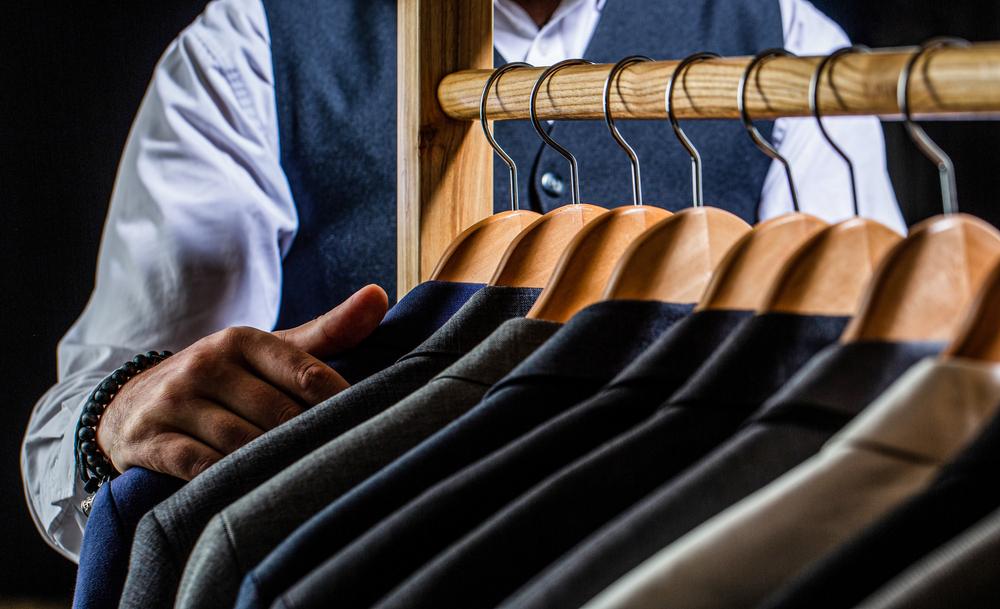
Use a broad, contoured hanger for the jacket. Thin wire or plastic hangers do not support the shoulders properly and can cause the jacket to lose structure over time. A wooden hanger with a wide shoulder profile is ideal because it helps the jacket retain its natural form. Cedar hangers can also help absorb moisture and discourage moths, though they should not be relied on as the only form of protection.
Trousers should be hung carefully to prevent deep creasing or stretching. Use a clamp hanger with soft padding or fold the trousers neatly over a sturdy trouser bar. Make sure the crease is aligned before hanging. If your trousers have pleats, keep them flat and properly positioned.
Your suit should be stored in a clean, dry, and well-ventilated closet. Avoid crowded storage. When suits are packed tightly together, the fabric cannot breathe, and the garment can become wrinkled or compressed. Give each suit enough space so the jacket hangs naturally.
For long-term storage, use a breathable garment bag. Avoid plastic dry-cleaning bags, which trap moisture and can cause mildew, odor, or fabric discoloration. A cloth garment bag protects against dust while allowing air circulation.
Key suit storage tips include:
- Use wide wooden hangers for jackets.
- Hang trousers with the crease properly aligned.
- Avoid overstuffed closets.
- Store suits in a cool, dry place.
- Use breathable garment bags instead of plastic covers.
- Keep suits away from direct sunlight to prevent fading.
- Allow a suit to air out before putting it back in the closet.
Suit maintenance tips
Regular suit maintenance is simple, but it must be consistent. The best approach is preventative care. Small habits after each wear can reduce wrinkles, odors, dust, and fabric damage.
First, rotate your suits. Wearing the same suit multiple days in a row does not give the fabric enough time to recover. Wool and other natural fibers benefit from rest because the fibers relax back into shape. If you wear suits often, build a rotation so each garment has at least 24 to 48 hours between wears.
Second, brush your suit after use. A soft-bristle clothing brush removes dust, lint, and surface debris before they settle into the fabric. Brush downward with gentle strokes, following the direction of the fibers. This is especially helpful for wool suits, which can attract particles throughout the day.
Third, empty all pockets after wearing. Leaving wallets, keys, phones, or business cards in the pockets can stretch the fabric and distort the suit’s silhouette. Bespoke suits are shaped with precision, so pocket strain should be avoided.
Fourth, address wrinkles early. Light wrinkles can often fall out naturally when the suit is hung properly overnight. For more noticeable creases, steaming may be appropriate. Avoid ironing directly on the fabric unless you know the correct heat setting and pressing technique. Improper ironing can create shine, flatten lapels, or damage delicate materials.
Basic suit maintenance habits include:
- Rotate suits instead of wearing the same one daily.
- Brush the fabric gently after each wear.
- Empty jacket and trouser pockets.
- Hang the suit immediately after use.
- Spot treat minor marks promptly.
- Avoid spraying cologne directly onto the fabric.
- Let the suit rest before storing it in a garment bag.
How to steam a suit
Steaming is one of the safest ways to refresh a suit and remove light wrinkles, but it must be done correctly. Steam relaxes fabric fibers without the direct pressure of an iron. This makes it useful for bespoke jackets, trousers, and other tailored pieces that depend on shape and structure.
Before steaming, hang the jacket on a proper suit hanger. Make sure there is enough space around the garment so steam can move through the fabric. Fill the steamer with clean water and allow it to heat fully. Distilled water is often a good choice because it helps reduce mineral buildup inside the steamer.
Hold the steamer a short distance from the fabric rather than pressing it directly against the suit. Move slowly from top to bottom, allowing the steam to relax wrinkles. Pay attention to the back, sleeves, and trouser legs. Do not oversaturate the fabric. Too much moisture can affect the suit’s structure, especially around the chest, shoulders, and lapels.
Avoid aggressive steaming around the canvassed areas of a bespoke jacket. The internal structure of a high-quality suit is carefully shaped, and too much heat or moisture can compromise that shape. Use light steam and let gravity do most of the work.
After steaming, allow the suit to dry and air out completely before wearing or storing it. Never place a freshly steamed suit directly into a garment bag. Trapped moisture can lead to odor, mildew, or fabric issues.
Steps for steaming a suit:
- Hang the suit properly on a wide hanger.
- Use clean or distilled water in the steamer.
- Keep the steamer slightly away from the fabric.
- Move slowly in downward motions.
- Avoid oversteaming the chest, shoulders, and lapels.
- Let the suit dry fully before storing.
- Use steam for light wrinkles, not major reshaping.
Suit cleaning best practices
Cleaning a bespoke suit should be handled with care. Many people assume frequent dry cleaning is the best way to keep a suit fresh, but overcleaning can shorten the life of the fabric. Dry-cleaning chemicals, heat, and mechanical agitation can gradually wear down natural fibers. The best practice is to clean only when necessary and rely on daily care habits between professional cleanings.
For minor surface dirt, brushing is usually enough. For small spots, use a clean white cloth and gently blot the area. Never rub aggressively, as rubbing can push the stain deeper into the fibers or damage the fabric texture. For water-based marks, a lightly damp cloth may help. For oil, wine, ink, or other serious stains, take the suit to a professional cleaner experienced with fine tailoring.
Always test any stain treatment carefully. Avoid household stain removers unless you are certain they are safe for the fabric. Many suits are made from wool, silk blends, cashmere blends, or other delicate materials that can react poorly to harsh products.
Odor can often be managed by airing the suit out. Hang it in a well-ventilated room after wearing. Avoid using fabric sprays that may leave residue or alter the scent of the garment. If odor persists, professional cleaning may be necessary.
Best practices for suit cleaning include:
- Brush the suit after each wear.
- Spot clean minor marks with gentle blotting.
- Avoid rubbing stains.
- Do not overuse dry cleaning.
- Air out the suit naturally.
- Use a professional cleaner for major stains.
- Tell your cleaner about the fabric and any known stain source.
Traveling with suits
Travel can be hard on suits, especially when they are folded, packed, or carried through airports. The goal is to minimize wrinkles, protect the structure, and make the suit easy to refresh upon arrival.
Whenever possible, travel with your suit in a garment bag. This allows the jacket and trousers to hang properly and reduces deep creasing. If you must pack the suit in luggage, fold it carefully using a method that protects the shoulders and lapels. Turn one shoulder inside out, tuck the other shoulder into it, align the lapels, and fold the jacket gently. Trousers should be folded along the crease and placed flat.
Place the suit near the top of your luggage so it is not crushed by shoes, toiletries, or heavier items. Use tissue paper or lightweight packing materials to reduce friction and sharp folds. Avoid overpacking, which puts pressure on the garment.
When you arrive, unpack the suit immediately. Hang it in the bathroom while you take a warm shower, allowing gentle ambient steam to relax minor wrinkles. Do not place the suit where it will get wet. For better results, use a handheld steamer if available.
Traveling with suits requires planning:
- Use a garment bag when possible.
- Pack the suit last so it sits near the top of the suitcase.
- Fold the jacket carefully to protect the shoulders.
- Fold trousers along the crease.
- Avoid placing heavy items on top of the suit.
- Unpack and hang the suit as soon as you arrive.
- Steam lightly before wearing if needed.
Suit garment bags
A suit garment bag is one of the most important accessories for suit protection, but not all garment bags are equal. The right bag helps shield your suit from dust, dirt, light, and travel-related damage while still allowing the fabric to breathe.
For storage, choose a breathable cloth garment bag. Cotton or nonwoven fabric bags are usually better than plastic because they allow airflow. Plastic bags from dry cleaners are meant for short-term transport only and should be removed once you get home.
For travel, choose a durable garment bag with enough length to hold the jacket and trousers without excessive folding. A quality travel garment bag may include pockets for shirts, ties, belts, and accessories. However, avoid overloading it. Too much weight inside the bag can press against the suit and create wrinkles.
Look for a garment bag with:
- Breathable fabric for long-term storage.
- A full-length zipper for easy access.
- Enough room for the suit to hang naturally.
- Durable handles for travel.
- Protection against dust and light.
- Minimal compression.
- A clean interior lining.
A garment bag should protect the suit, not suffocate it. For closet storage, breathability matters most. For travel, structure and durability are the priority.
Dry cleaning vs. hand care
Dry cleaning and hand care serve different purposes. Dry cleaning is useful when a suit has deep stains, a persistent odor, or general soil that cannot be removed through brushing and airing. Hand care is what you do between cleanings to preserve the suit’s condition.
A bespoke suit should not be dry cleaned after every wear. In most cases, dry cleaning a few times per year is enough, depending on how often the suit is worn and the conditions in which it is used. A suit worn weekly in a business setting may need professional cleaning more often than one reserved for special occasions. However, the guiding rule is simple: clean when needed, not out of habit.
Hand care includes brushing, airing, steaming, spot treatment, and proper storage. These habits reduce the need for frequent dry cleaning and help maintain the natural texture of the fabric.
Dry cleaning is best for:
- Serious stains.
- Persistent odors.
- Built-up soil.
- Seasonal cleaning.
- Professional finishing before an important event.
Hand care is best for:
- Daily maintenance.
- Light wrinkles.
- Dust and lint removal.
- Minor surface marks.
- Preserving fabric between professional cleanings.
When choosing a dry cleaner, select one that understands fine tailoring and bespoke garments. Ask whether they have experience with canvassed jackets, delicate fabrics, and hand-finished details. A poorly handled suit can lose shape, develop shine, or come back with flattened lapels.
FAQ
How often should I dry-clean my bespoke suit?
Most bespoke suits do not need frequent dry cleaning. Clean only when there are stains, odors, or visible soil. For many wearers, a few professional cleanings per year is enough.
Can I steam my suit at home?
Yes. Light steaming can remove wrinkles and refresh the fabric. Use gentle steam, avoid oversaturating the suit, and let it dry completely before storing.
Should I iron my bespoke suit?
Avoid direct ironing unless you know proper pressing techniques. Incorrect ironing can damage fabric, create shine, or flatten the jacket’s shape. Steaming is usually safer for light wrinkles.
What kind of hanger should I use for a suit jacket?
Use a wide, contoured wooden hanger. It supports the shoulders and helps the jacket keep its natural structure.
Is it bad to keep a suit in a plastic dry-cleaning bag?
Yes. Plastic bags can trap moisture and restrict airflow. Use a breathable garment bag for storage instead.
How do I remove lint from a suit?
Use a soft clothing brush. Brush gently in downward strokes. A lint roller can be used occasionally, but brushing is better for regular care.
Can I wear the same suit two days in a row?
It is better not to. Give the suit at least 24 to 48 hours to rest so the fabric can recover its shape.
What should I do if my suit gets wet?
Shake off excess water, hang it on a proper hanger, and let it air dry naturally. Do not use high heat. Once dry, brush the fabric gently.
How should I pack a suit for a flight?
Use a garment bag when possible. If packing in a suitcase, fold the jacket carefully, place it near the top, and unpack it immediately upon arrival.
How can I keep my suit smelling fresh?
Air it out after each wear, avoid overuse of fragrance, and store it in a clean, ventilated closet. Persistent odor may require professional cleaning.
Work with Peter Panos Bespoke Tailor
A bespoke suit deserves expert care, and it begins with expert craftsmanship. At Peter Panos Bespoke Tailor, we have proudly served the San Francisco, CA, area with master bespoke tailoring for businessmen, celebrities, and clients who value exceptional fit, quality, and personal style. We specialize in custom suits, pants, coats, and shirts designed around your measurements, preferences, and lifestyle, allowing you to integrate your own unique style into high-quality tailored apparel.
Whether you need a new custom suit, refined alterations, wardrobe guidance, or professional insight on caring for your tailored garments, we are ready to help. Reach out to us to schedule a consultation and experience the difference of true bespoke tailoring in San Francisco.
Categorised in: Bespoke Suit